Martyn’s Law: What Schools Need to Know – And How to Prepare

The safety of students, staff and visitors is a priority for every education setting.
The Terrorism (Protection of Premises) Act 2025, commonly known as Martyn’s Law, introduces new duties designed to improve preparedness for terrorist attacks at qualifying premises and events. The Act became law on 3 April 2025. [gov.uk]
For schools, this brings an important question into sharper focus:
Can your school communicate in an emergency?
Having procedures in place is important. But schools also need to consider how the right information reaches the right people when those procedures need to be put into action.
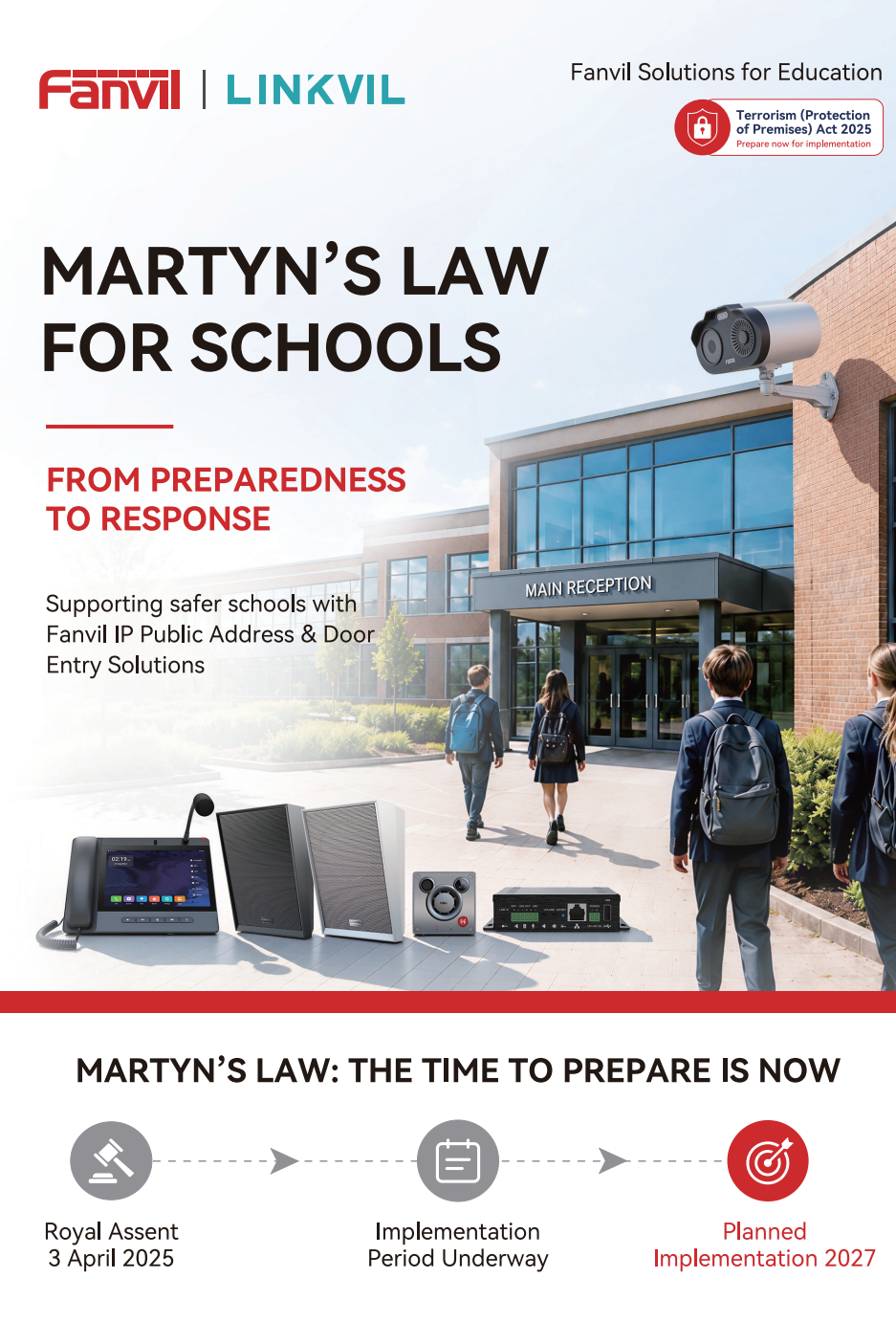
What Is Martyn’s Law?
Martyn’s Law is named in memory of Martyn Hett, one of the 22 people killed in the Manchester Arena attack in 2017.
The legislation is intended to improve protective security and organisational preparedness across the UK by requiring those responsible for certain premises and events to consider how they would respond to a terrorist attack. [gov.uk]
Education settings where 200 or more people can reasonably be expected to be present at the same time can fall within scope.
Early years, primary, secondary and further education premises have special provisions under the Act and remain within the standard tier even where 800 or more people may be expected to be present. Higher education premises follow the wider tier structure. [gov.uk]
The latest Home Office statutory guidance states that further details will be provided on when the Act’s substantive requirements commence. [gov.uk]
What will schools need to consider?
For standard-duty qualifying premises, the responsible person will need to notify the Security Industry Authority and ensure that appropriate public-protection procedures are in place, so far as is reasonably practicable. [gov.uk]
Those procedures cover four areas:
Evacuation
Moving people away from danger and out of the premises, event or relevant part of it.
Invacuation
Moving people to a safer place within the premises or event.
Lockdown
Securing the premises or event to prevent or restrict people entering or leaving.
Communication
Communicating information to people on the premises or at the event. [gov.uk]
For schools, that makes communication an important part of the wider preparedness conversation.
Educational environments are dynamic and often open, with large numbers of people moving through them daily. As a result, they are likely to fall within the scope of Martyn’s Law.
Key areas of focus will include:
1. Risk Awareness and Assessment
Schools will need to identify potential vulnerabilities and put plans in place to address them. This includes reviewing site layouts, access points, and existing safety procedures.
2. Staff Training and Preparedness
Staff will play a crucial role in maintaining a safe environment. Ensuring they understand how to respond to incidents and recognise risks will be essential.
3. Communication and Coordination
Clear, reliable communication systems are vital in any emergency. Schools must be able to quickly share information, coordinate responses, and guide students and staff effectively.
4. Access Control and Monitoring
Improved oversight of who enters and exits school premises will become increasingly important, helping to minimise potential risks.
5. Use of Technology to Support Safety
Modern communication and security technologies can significantly enhance preparedness. From site-wide announcements to integrated access control solutions, technology can help schools respond faster and more effectively.
See a School Emergency Communication Solution in Action
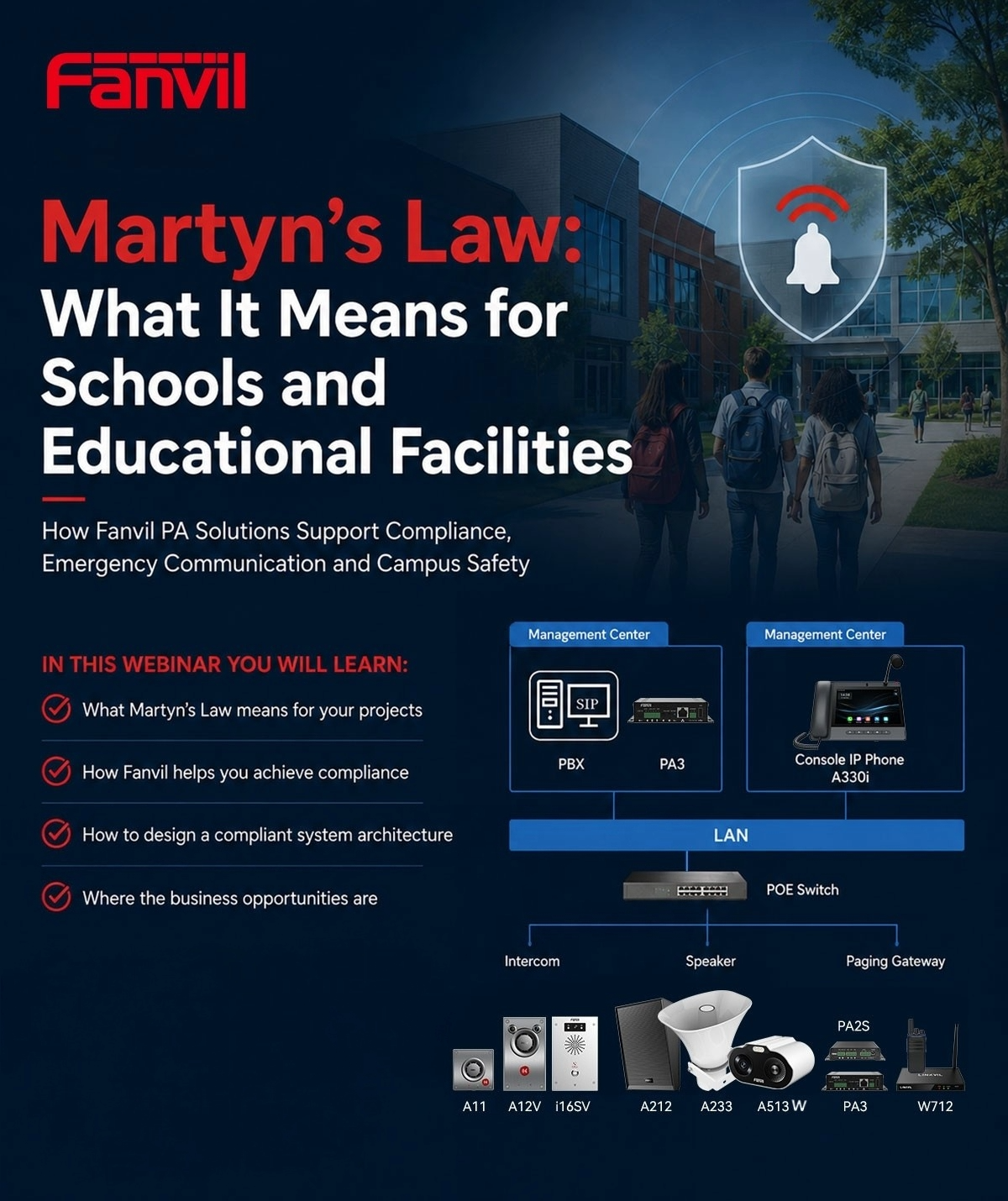
Clear, reliable communication is one of the most important elements of an effective emergency response plan. Solutions such as the Fanvil PA3 IP Paging Gateway and Fanvil A330i IP Speaker can help schools quickly deliver lockdown alerts, evacuation instructions, emergency notifications, and routine announcements across their sites.
By combining IP-based paging with powerful audio broadcast capabilities, educational facilities can improve staff coordination, communicate critical information faster, and enhance overall preparedness for emergency situations.
Watch the demonstration video to see how the Fanvil PA3 and A330i can support school safety and emergency communications:
🎥 View the Fanvil PA3 Demo Video Here
🎥 View the Fanvil A330i Demo Video Here
Whether supporting daily operations or assisting during critical incidents, effective communication technology can form an important part of a school’s approach to safety, preparedness, and compliance with the objectives of Martyn’s Law: What Schools Need to Know – And How to Prepare.
This is the most natural placement because the article transitions from explaining the requirements of the legislation into practical technologies that can help schools meet those objectives.
What It Means for Schools and Educational Facilities
Want a feel for our products? There are more videos available on our Yellowgrid YouTube Channel.
Reseller application – Click HERE to apply
Looking for more information? No problem, contact us on 03330144340 or sales@yellowgrid.co.uk.